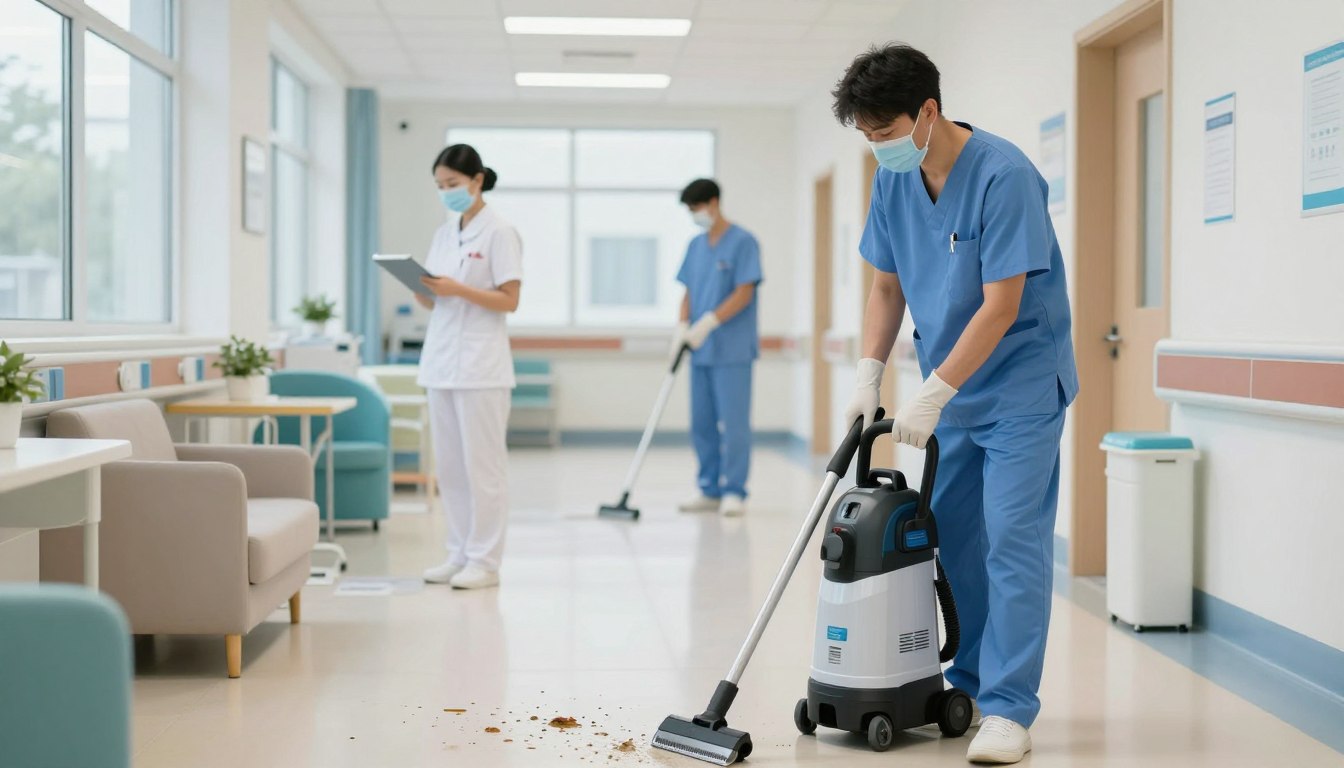
Maintaining a clean and hygienic environment is crucial in healthcare settings. As experts in Commercial Cleaning Melbourne, we understand the importance of this aspect in hospitals and healthcare facilities. A clean environment not only ensures patient safety but also enhances their overall experience.
The healthcare sector faces unique challenges in maintaining cleanliness, from controlling infections to managing waste. Top teams employ effective strategies to overcome these challenges, ensuring a safe and healthy environment for patients and staff.
Key Takeaways
- Understanding the importance of cleanliness in healthcare settings
- Identifying the biggest challenges faced by hospitals and healthcare facilities
- Strategies employed by top teams to maintain a clean environment
- The role of expert cleaning services in healthcare
- Enhancing patient safety and experience through cleanliness
Understanding the Importance of Healthcare Cleaning
In healthcare facilities, cleanliness plays a vital role in patient care. Ensuring that hospitals and healthcare centers are clean is not just about maintaining a pleasant environment; it’s a critical component of patient safety and care quality. As we explore the importance of healthcare cleaning, it’s essential to understand its impact on patient outcomes and the overall healthcare experience.
The Role of Cleanliness in Patient Care
Cleanliness in healthcare settings directly affects patient care. A clean environment reduces the risk of hospital-acquired infections (HAIs), which are a significant concern for patient safety. According to recent studies, HAIs affect a substantial number of patients worldwide, leading to prolonged hospital stays, increased healthcare costs, and higher mortality rates. Effective cleaning practices, including those provided by office cleaning services and commercial janitorial services, are crucial in minimizing these risks.
“A clean hospital is a safe hospital,” as emphasized by healthcare professionals. The role of cleanliness extends beyond patient rooms to include operating theaters, waiting areas, and other high-traffic zones within healthcare facilities. Ensuring that all areas are thoroughly cleaned and disinfected is vital for preventing the spread of infections.
Regulatory Compliance and Standards
Healthcare facilities must comply with stringent regulatory standards regarding cleanliness and infection control. These standards are set by various national and international bodies to ensure that healthcare providers maintain high levels of cleanliness and patient safety. Compliance with these regulations is not only mandatory but also essential for maintaining the trust of patients and the community.
Regulatory compliance involves adhering to guidelines on cleaning protocols, staff training, and the use of appropriate cleaning equipment and materials. Commercial janitorial services that specialize in healthcare cleaning are well-versed in these regulations and can help facilities meet the required standards. By outsourcing cleaning services to experienced providers, healthcare facilities can ensure that they are meeting regulatory requirements while focusing on their core mission of providing quality patient care.
“Ensuring compliance with regulatory standards is crucial for maintaining patient trust and safety in healthcare facilities.”
By understanding the importance of healthcare cleaning and adhering to regulatory standards, healthcare facilities can significantly enhance patient care and safety. Effective cleaning practices are not just a necessity; they are a critical component of quality healthcare delivery.
The Top 10 Challenges in Hospital Cleaning
Hospitals face a multitude of cleaning challenges that require specialized solutions. Ensuring the cleanliness of hospitals is crucial for patient care and safety. A reputable commercial cleaning company can play a vital role in addressing these challenges.
High-traffic Areas and Infection Control
High-traffic areas in hospitals are breeding grounds for bacteria and viruses, making infection control a top priority. Professional cleaners Melbourne understand the importance of maintaining these areas to prevent the spread of infections.
- Implementing rigorous cleaning schedules
- Using advanced cleaning technologies
- Ensuring proper disinfection of all surfaces
Diverse Patient Needs and Special Requirements
Hospitals cater to diverse patient needs, including those with compromised immune systems. Cleaning protocols must be tailored to meet these special requirements, ensuring a safe environment for all patients.
- Identifying areas that require special cleaning protocols
- Training staff to handle diverse patient needs
- Utilizing cleaning products that are safe for all patients
Strict Regulatory Guidelines
Compliance with strict regulatory guidelines is essential in hospital cleaning. A commercial cleaning company must be well-versed in these regulations to ensure the hospital remains compliant.
Some of the key regulatory guidelines include:
- Adhering to infection control standards
- Maintaining detailed cleaning records
- Ensuring staff are trained in compliance requirements
By understanding and addressing these challenges, hospitals can maintain a clean and safe environment for patients and staff. Professional cleaners Melbourne and reputable commercial cleaning companies are crucial in this endeavor.
Inadequate Staff Training and Experience
Effective hospital cleaning demands more than just basic training; it requires ongoing education and experienced personnel. The complexity of healthcare environments necessitates a deep understanding of infection control, patient safety, and the handling of sensitive areas within hospitals.
Importance of Ongoing Training Programs
Ongoing training programs are crucial for maintaining a high standard of cleanliness in hospitals. These programs ensure that cleaning staff are updated on the latest cleaning protocols, infection control measures, and the use of new equipment. Commercial cleaning solutions providers often offer specialized training that covers these aspects, enhancing the capability of cleaning staff to deliver high-quality services.
Regular training sessions also help in addressing specific challenges faced by hospital cleaning staff, such as managing biohazardous waste and dealing with outbreaks of infectious diseases. By investing in ongoing training, hospitals can significantly reduce the risk of hospital-acquired infections and improve patient safety.
Utilizing Experienced Cleaning Personnel
Utilizing experienced cleaning personnel is another critical aspect of maintaining effective hospital cleaning. Experienced staff bring a wealth of knowledge and understanding of the nuances involved in hospital cleaning, including the ability to identify and mitigate potential infection risks. Commercial cleaners in Melbourne and other regions often have teams of experienced personnel who are well-versed in the specific requirements of healthcare facilities.
Experienced cleaning personnel are not only more efficient in their work but also play a vital role in ensuring compliance with regulatory standards and guidelines. Their expertise is invaluable in maintaining a clean and safe environment for patients, staff, and visitors.
By combining ongoing training programs with the utilization of experienced cleaning personnel, hospitals can significantly enhance their cleaning operations. This approach not only improves patient safety but also contributes to a more efficient and effective cleaning service.
Managing Infectious Diseases
Managing infectious diseases is a critical aspect of healthcare that requires a comprehensive approach, including the implementation of effective cleaning protocols and the handling of hazardous materials. Industrial cleaning services play a vital role in this process, ensuring that healthcare facilities maintain a clean and safe environment for patients and staff.
Best Practices for Hazardous Material Handling
Handling hazardous materials is a critical component of infection control in healthcare settings. Best practices include using personal protective equipment (PPE), following strict guidelines for the disposal of biohazardous waste, and ensuring that all staff members are trained in the proper handling and disposal procedures.
Effective training programs are essential for ensuring that staff understand the risks associated with hazardous materials and know how to manage them safely. This includes regular training sessions and updates on new guidelines and regulations.
Implementing Effective Cleaning Protocols
Implementing effective cleaning protocols is crucial for controlling the spread of infectious diseases in healthcare facilities. This involves developing and enforcing rigorous cleaning schedules, using appropriate cleaning agents and equipment, and ensuring that all areas of the facility are regularly cleaned and disinfected.
Regular audits and feedback mechanisms are also important for maintaining high standards of cleanliness. By monitoring cleaning practices and addressing any issues promptly, healthcare facilities can ensure that their cleaning protocols are effective and up-to-date.
- Develop and enforce rigorous cleaning schedules.
- Use appropriate cleaning agents and equipment.
- Ensure regular cleaning and disinfection of all areas.
By adopting these strategies and leveraging the expertise of industrial cleaning services, healthcare facilities can enhance their infection control measures and provide a safer environment for patients and staff.
The Impact of Technology on Cleaning Practices
As technology advances, Melbourne commercial cleaning experts are leveraging innovative solutions to enhance hospital cleaning practices. The integration of technology in healthcare cleaning has not only improved the efficiency of cleaning operations but also enhanced the overall cleanliness and hygiene of healthcare facilities.
Innovative cleaning technologies are being adopted to tackle the complex challenges of hospital cleaning. According to industry experts, “The use of advanced cleaning equipment and tools is crucial in maintaining high standards of cleanliness in hospitals.” This is particularly important in high-risk areas such as operating theaters and patient rooms.
Innovative Cleaning Equipment and Tools
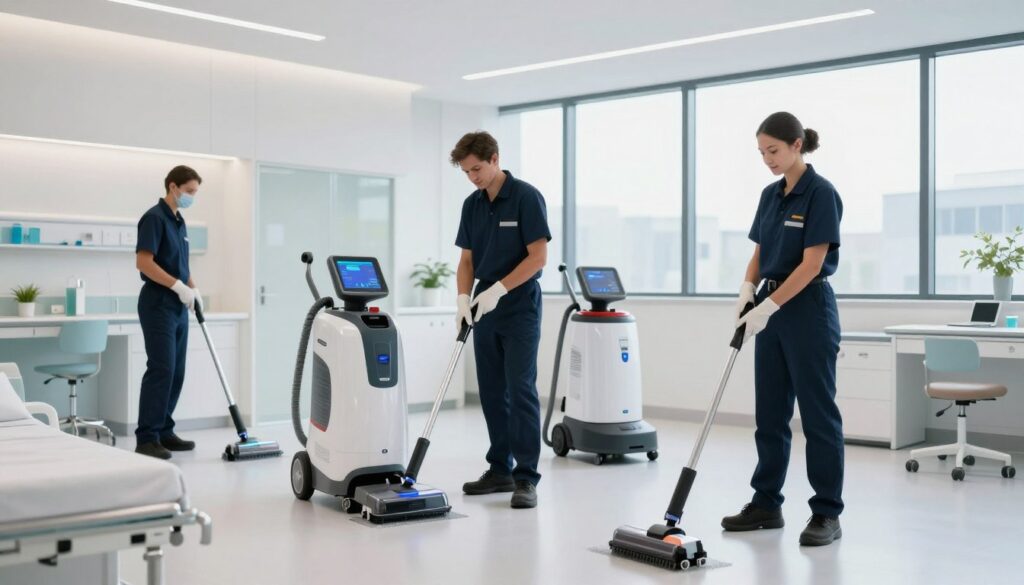
Melbourne commercial cleaning experts are utilizing a range of innovative cleaning equipment and tools to improve cleaning outcomes. These include:
- UV-C disinfection robots that can effectively kill bacteria and viruses on surfaces.
- Advanced floor cleaning machines that can handle large areas efficiently.
- Electrostatic sprayers that ensure comprehensive coverage of disinfectants.
These technologies not only enhance the effectiveness of cleaning but also reduce the workload on cleaning staff, allowing them to focus on other critical tasks.
Automation in Healthcare Cleaning
Automation is playing an increasingly significant role in healthcare cleaning. Automated cleaning systems can operate around the clock without fatigue, ensuring consistent cleaning standards. As noted by a leading cleaning expert, “Automation in cleaning is not just about replacing human labor; it’s about augmenting it to achieve higher standards of cleanliness.”
The benefits of automation in healthcare cleaning include:
- Increased efficiency and productivity.
- Improved consistency in cleaning quality.
- Enhanced safety for both patients and staff.
By embracing technology and automation, Melbourne commercial cleaning experts are setting new benchmarks in healthcare cleaning. As the healthcare sector continues to evolve, the role of technology in maintaining cleanliness and hygiene will only become more critical.
“The future of healthcare cleaning lies in embracing technological advancements to deliver superior cleaning outcomes.”
Budget Constraints and Resource Allocation
Effective budget management is crucial for maintaining high standards of cleanliness in hospitals. Healthcare facilities face the daunting task of balancing the need for cleanliness with financial constraints. We explore how top teams navigate these challenges.
Cost-effective Solutions for Quality Cleaning
One approach to managing budget constraints is to adopt cost-effective cleaning solutions that do not compromise on quality. For instance, leveraging services like office cleaning Melbourne providers can offer scalable and efficient cleaning solutions. These services often utilize advanced equipment and trained personnel, ensuring high-quality outcomes.
Implementing energy-efficient cleaning equipment and sustainable practices can also reduce costs in the long run. Moreover, adopting a scheduled maintenance program can prevent costly repairs and replacements.
Balancing Quality and Affordability
Balancing the need for high-quality cleaning with affordability is a delicate task. It involves assessing various cleaning service providers to find the best value for money. We must consider factors such as the range of services offered, the expertise of the cleaning staff, and the flexibility of the service provider.
To achieve this balance, healthcare facilities can:
- Conduct regular audits to assess cleaning quality and identify areas for improvement.
- Negotiate contracts with service providers that include performance metrics and penalties for non-compliance.
- Invest in training for cleaning staff to enhance their skills and efficiency.
By adopting these strategies, healthcare facilities can ensure that they maintain high standards of cleanliness without exceeding their budget.
Maintaining Consistency Across Facilities
Maintaining uniform cleaning standards is essential for patient care and safety across different healthcare facilities. Consistency in cleaning protocols ensures that all areas, regardless of the facility, maintain high standards of hygiene and safety.
This uniformity is crucial for preventing hospital-acquired infections and ensuring compliance with regulatory standards.
Standardizing Cleaning Protocols
Standardizing cleaning protocols is the first step towards achieving consistency. This involves developing comprehensive cleaning schedules, using standardized cleaning products, and ensuring that all staff are trained in the same protocols.
For instance, cleaning services in Melbourne can implement standardized protocols that cater to the diverse needs of various healthcare facilities. By doing so, they can ensure that every facility, regardless of its size or specialty, adheres to the same high standards of cleanliness.
Standardization also facilitates easier training and auditing processes. When protocols are uniform, new staff can be trained more efficiently, and audits become more straightforward, as there’s a clear benchmark against which to measure performance.
Regular Audits for Quality Assurance
Regular audits are crucial for ensuring that the standardized protocols are being followed. These audits involve checking compliance with the set protocols, identifying areas for improvement, and implementing corrective actions.
Audits can be conducted internally or by external agencies to ensure objectivity. For example, a healthcare facility might conduct monthly audits to check adherence to their cleaning protocols, using the findings to adjust their practices as needed.
By combining standardized protocols with regular audits, healthcare facilities can maintain high levels of cleanliness and safety. This not only enhances patient care but also supports the overall reputation of the facility.
Environmental Factors Affecting Cleaning
The cleanliness of healthcare facilities is influenced by various environmental factors that need to be addressed to ensure a safe and healthy environment for patients and staff.
At our organization, we recognize the importance of mitigating these factors to provide top-notch cleaning services. In Melbourne, for instance, our cleaning services Melbourne are tailored to address the unique environmental challenges faced by healthcare facilities in the region.
Addressing Allergens and Air Quality
Allergens and poor air quality are significant concerns in healthcare settings. Dust, mold, and other airborne pathogens can exacerbate respiratory conditions and compromise patient health.
To address these issues, we implement rigorous cleaning protocols that include the use of HEPA-filter vacuum cleaners and antimicrobial treatments. Our team is trained to identify and mitigate sources of allergens and air pollution, ensuring a cleaner and healthier environment.
Seasonal Challenges in Cleaning
Seasonal changes can bring unique cleaning challenges, from pollen and dust during spring and summer to moisture and mold during autumn and winter.
Our cleaning services are adapted to meet these seasonal challenges. For example, during peak pollen seasons, we increase the frequency of dusting and vacuuming, and we use specialized equipment to remove allergens from surfaces and air ducts. By understanding and preparing for these seasonal challenges, we help healthcare facilities maintain a clean and safe environment year-round.
By addressing environmental factors such as allergens, air quality, and seasonal challenges, we can ensure that healthcare facilities receive the highest level of cleaning service. Our commitment to adapting to these factors is what sets our cleaning services Melbourne apart.
The Role of Communication in Effective Cleaning
For top-tier cleaning services, such as those provided by melbourne cleaning services, effective communication is crucial. It ensures that all stakeholders are on the same page, facilitating a smoother operation. In healthcare settings, this means that cleaning teams can better understand and meet the needs of healthcare professionals, ultimately enhancing patient care.
Effective communication involves more than just conveying instructions; it’s about creating a collaborative environment where feedback is encouraged and acted upon. This not only improves the quality of cleaning services but also fosters a culture of continuous improvement.
Collaboration Between Healthcare and Cleaning Teams
Collaboration is at the heart of effective cleaning in healthcare facilities. When cleaning teams work closely with healthcare professionals, they can better understand the specific cleaning requirements of different areas within the facility. For instance, operating theaters have different cleaning needs compared to patient rooms.
- Regular meetings between healthcare and cleaning staff to discuss cleaning schedules and requirements.
- Clear communication channels for reporting any cleaning issues or concerns.
- Joint training sessions to ensure that both teams are aware of the latest cleaning protocols and standards.
Feedback Mechanisms for Continuous Improvement
Implementing effective feedback mechanisms is crucial for continuous improvement in cleaning services. This involves not just receiving feedback but also acting upon it to make tangible changes.
- Conducting regular satisfaction surveys among healthcare staff to gauge the quality of cleaning services.
- Establishing a clear and responsive system for reporting and addressing cleaning-related concerns.
- Using feedback to adjust cleaning protocols and training programs as needed.
By prioritizing communication and collaboration, cleaning services can significantly enhance their effectiveness, contributing to a safer and healthier environment for patients and staff alike.
What Top Teams Do Differently
Top-performing teams in healthcare cleaning distinguish themselves through their commitment to excellence and innovation. As a leading provider of Commercial Cleaning Melbourne, we have identified key strategies that set these teams apart.
Expertise and Best Practices
Leading commercial cleaning services adopt best practices that prioritize patient safety, staff well-being, and environmental sustainability. These practices include rigorous staff training, effective cleaning protocols, and the use of innovative cleaning equipment.
Continuous Improvement
Our team remains dedicated to continuous enhancement and innovation, ensuring that our cleaning services meet the evolving needs of healthcare facilities. By staying at the forefront of industry developments, we deliver high-quality Commercial Cleaning Melbourne services that exceed client expectations.